
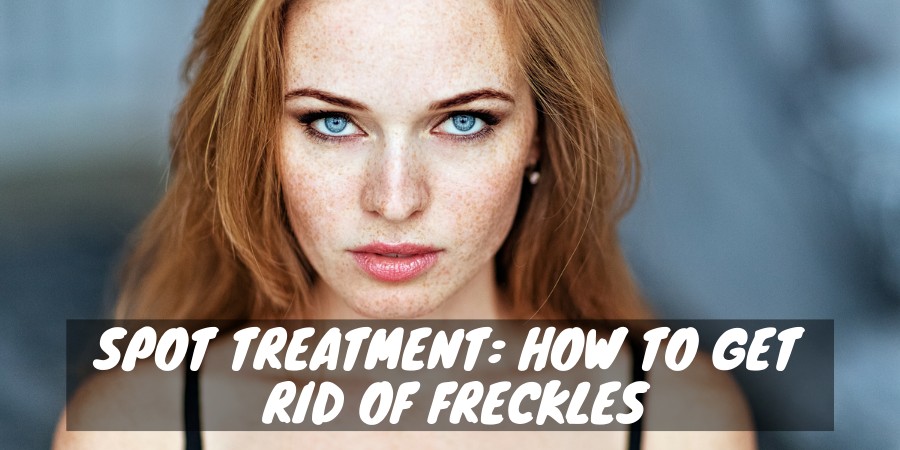
How to Get Rid of Freckles
Some people love their freckles, but others find that they’re more of a nuisance than anything else.
If you belong to the latter group, getting rid of your freckles is probably one of your top skincare priorities.
It won’t be as straightforward as, say, putting acne cream on a pimple. But getting rid of your freckles is perfectly doable with a little know-how and a lot of patience.
What Are Freckles, Anyway?
Freckles are flat, brown spots that appear on your skin, often in large clusters on broad areas of skin.
Your face, arms, shoulders, back and chest are common locations for freckles, but they can appear anywhere on your body.
Freckles are made of melanin, the compound that lends color to your eyes, hair, and skin. Melanin cells, or melanocytes, exist to protect you from sun damage, absorbing harmful UV rays so they don’t reach your more sensitive cells.
Your freckles are spots where melanocytes produce extra melanin, which is why they appear more pigmented than the rest of your skin.
You’re more likely to have them if you have lighter skin, as darker skin already contains more melanin, spread more evenly.
Why Do Freckles Appear?

Some people are more genetically prone to developing freckles than others. But nobody is born with them.
That’s because all freckles appear in response to sun exposure.
The sun activates your melanocytes, causing them to spring into action to protect you from UV damage.
This is why many people notice that their freckles become more prominent in the sun, and why they tend to appear on uncovered areas of skin. It’s also why freckles often disappear in the winter, returning in the summer when the sun’s rays are more powerful.

- Pairs moisture with broad-spectrum SPF 40 protection when used as directed.
- Helps skin feel softer and fine lines look less noticeable through hydration.
- Works alone or under makeup, making daily sun protection easier to fit in.
Sun Spots Vs. Freckles
But wait… aren’t the dots that appear after sun exposure called sun spots? Are they the same thing as freckles?
Not quite.
Freckles are hereditary and strongly linked to certain variants of the MC1R gene. They appear in order to protect you from the sun and are not the result of sun damage.
Sun spots, on the other hand, develop as a result of sun damage and are not dependent on genes. They tend to be larger than freckles and often appear with age, hence their other name, “age spots.”
Unlike freckles, sun spots do not fade during the winter, though they may fade slightly after extended periods (months or years) without sun exposure. They are not harmful, but they do indicate excessive sun exposure in the past.
Moles Vs. Freckles

And what about moles? Are they related to freckles at all?
Moles are clusters of melanocytes; some are flat, while others are raised and extend deeper into the skin. They are typically larger and darker than freckles due to the higher concentrations of melanocytes.
Genes are partially responsible for moles, but anybody can develop them after enough sun exposure. Moles can also develop in areas that haven’t been exposed to the sun, and they don’t fade with the seasons like freckles do.
The biggest difference is in the health risk. Freckles are always benign, but moles can indicate skin cancer, especially if they appear suddenly, grow rapidly, itch, bleed or become misshapen.
How to Fade Freckles
Happy with your freckles? There’s no need to change them. If you’d prefer a more even tone, some treatments can help them fade—but sun exposure can bring them back.
Reveal a New Layer of Skin with a Chemical Peel
One way to get rid of your freckles is to remove the layers of skin that contain the melanocytes that produce them.
And the most popular way to do that is by getting a chemical peel.
During a chemical peel, an esthetician or dermatologist will apply a chemical solution to your skin. The solution typically contains glycolic acid, which works on the top layers, or trichloroacetic acid, which reaches the middle layers, stripping the outer layers away.
Chemical peels can be painful and require lots of aftercare. You’ll need to avoid the sun for several weeks, apply ointment daily and potentially take an antiviral drug as a precaution.
Try a Topical Freckle Fading Cream
For a less-invasive option, try a cream that contains hydroquinone, a skin bleaching ingredient that is believed to suppress melanin production and thus fade freckles.
In the U.S., hydroquinone has been available only by prescription since 2020. It’s recommended to consult a dermatologist before using any hydroquinone product to reduce the risk of side effects.
Freeze Your Freckles Away with Cryosurgery

Cryosurgery isn’t surgery in the traditional sense. There’s no anesthesia, no incisions and very little recovery time.
During cryosurgery, liquid nitrogen is applied to your freckles with a cotton swab or spray. Liquid nitrogen is extremely cold, freezing and destroying any cells it touches.
After the procedure, blisters will form, then crust over and fall off, revealing freckle-free skin.
In rare cases, cryosurgery can leave scars behind, so you’ll need to be prepared for your freckles to be replaced with marks of a different kind. However, most of the time, there are no lasting side effects from the procedure.
Amp Up Exfoliation with Microdermabrasion
Microdermabrasion is a safe, easy way to thoroughly exfoliate your skin and reduce the appearance of your freckles.
Using a diamond-tipped tool, an esthetician removes the outer layer of your skin and all of the dead, damaged skin cells that coat it. This process also removes some of the pigmented surface cells, which helps freckles look lighter.
Microdermabrasion won’t completely get rid of your freckles, but it will lighten them and make them much less noticeable. It’s a good option for those who need something more powerful than bleaching cream but don’t want to undergo cryosurgery or a chemical peel.
Experience the Power of Light with Laser Treatment
Laser treatment is effective for many different skin conditions, including freckles.
By targeting intense light at your freckled skin, the laser heats up your melanocytes and breaks them into tiny particles. Your body then clears the fragments away, and some flake off in tiny crusts.
Laser freckle removal requires multiple sessions and can be painful. Your skin may itch, swell or peel after treatment, and you’ll need to stay out of the sun for several weeks after.
How to Remove Freckles at Home
If you’re looking for a less drastic way to fade your freckles, try one of these at-home methods.
Skip the Vinegar and Lemon Juice
Your freckles don’t need a daily dose of vinegar or lemon juice. Both can irritate skin, and lemon juice can cause a reaction after sun exposure. Start with consistent sun protection, then ask a dermatologist about fading options if you want to take things further.

- Helps boost your skin's glow with a vitamin C derivative formulated for sensitive skin.
- Absorbs quickly and layers easily under moisturizer, sunscreen or makeup.
- Keeps the serum better protected from oxidation with an airless pump.
Go All Natural with Aloe Vera Gel
Aloe vera is great for sunburns, bug bites and other minor wounds. But it’s also thought to be effective at fading freckles.
Two compounds found in aloe vera, aloin and aloesin, have lightening effects. They slow melanin production (aloesin blocks tyrosinase, the enzyme melanocytes use to make pigment), resulting in lighter freckles.
Just remove some gel from an aloe vera leaf and rub a thin layer over your freckles several times a day. Results may take several months to show.
Bonus: aloe vera is a great moisturizer and hydrator, so you can get even more benefits out of this amazing plant.
How to Hide Freckles
Decided you’d rather mask your freckles than remove or lighten them? We’ve got you covered.
First things first: start with a base layer of sunscreen so your freckles don’t pop out when you’re exposed to the sun. Use a broad-spectrum sunscreen with an SPF of at least 30.
Next, apply concealer to your bare skin to cover your freckles. You can use a concealer that matches your skin tone or opt for a yellow or orange concealer to counter the tone of your freckles.
Don’t forget to blend the edges of your concealer to reduce blotchiness.
You can then apply your foundation over your concealer. Your foundation should match your skin tone as closely as possible to effectively mask your freckles.
How to Get Rid of Freckles and Skin Pigmentation (Video)
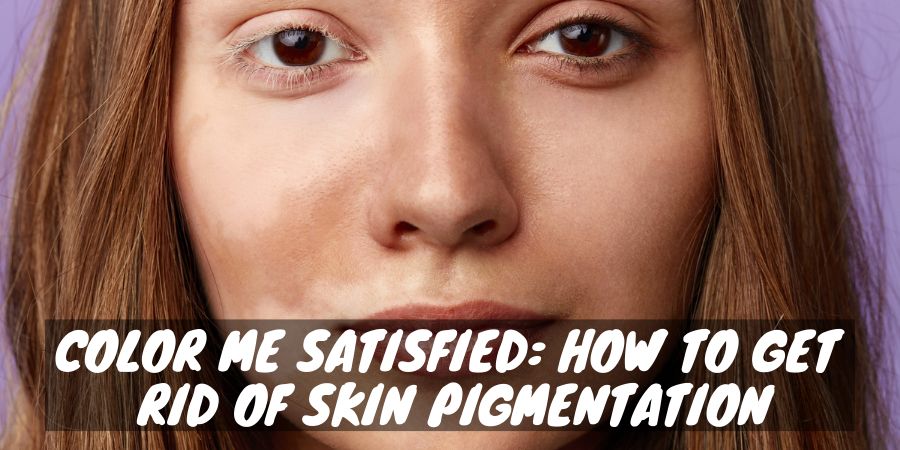
How to Get Rid of Skin Pigmentation
How to Pick the Best Sunscreen for Your Skin
